

How to Make a Spanish Latte at Home (Hot or Iced)

A Spanish latte comes down to three ingredients: espresso, milk, and sweetened condensed milk, built at roughly a 1:1 coffee-to-milk ratio instead of the standard latte’s 1:2. That ratio is what gives it a bolder coffee flavor and a thicker, almost dessert-like texture.
The same base recipe works hot or iced, and neither version needs more than a stovetop, a mug, and an espresso maker (or even instant coffee in a pinch).
Spanish Latte Recipe
Prep Time: 5 minutes Cook Time: 0 minutes Total Time: 5 minutes Yield: 1 serving (about 12 oz) Category: Drinks Cuisine: Coffee Shop
Ingredients
- 2 shots espresso (about 2 oz), or 2 tablespoons instant coffee dissolved in 2 tablespoons hot water
- 4–5 oz whole milk
- 1.5–2 tablespoons sweetened condensed milk
- 1 cup ice (for iced version)
Instructions
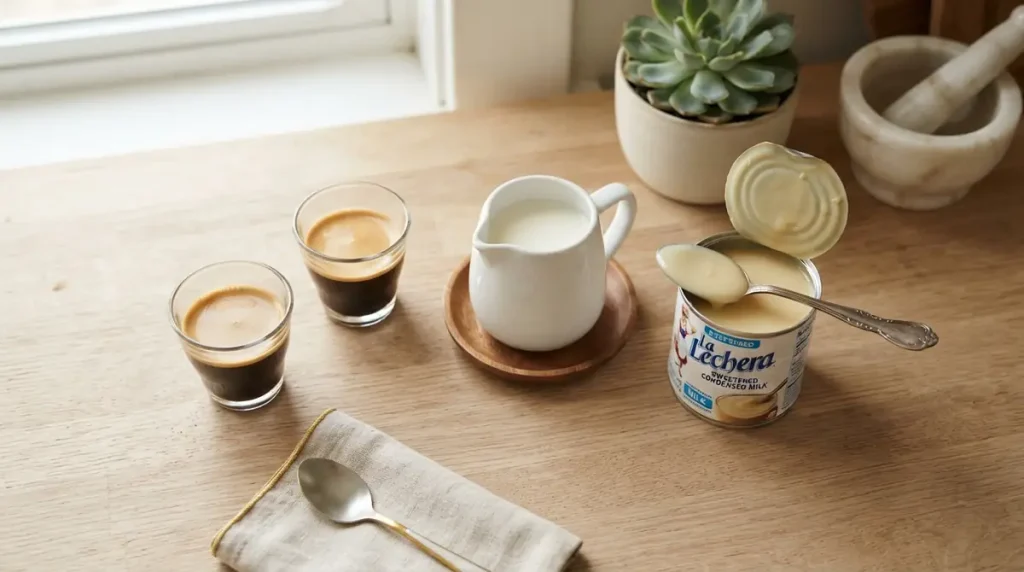
- Add condensed milk. Spoon 1.5–2 tablespoons of sweetened condensed milk into the bottom of your glass or mug.
- Add milk. Pour in 4–5 oz of milk (cold for iced, steamed for hot) and stir until the condensed milk fully dissolves.
- Add ice (iced version only). Fill the glass with ice, leaving room near the top for the espresso.
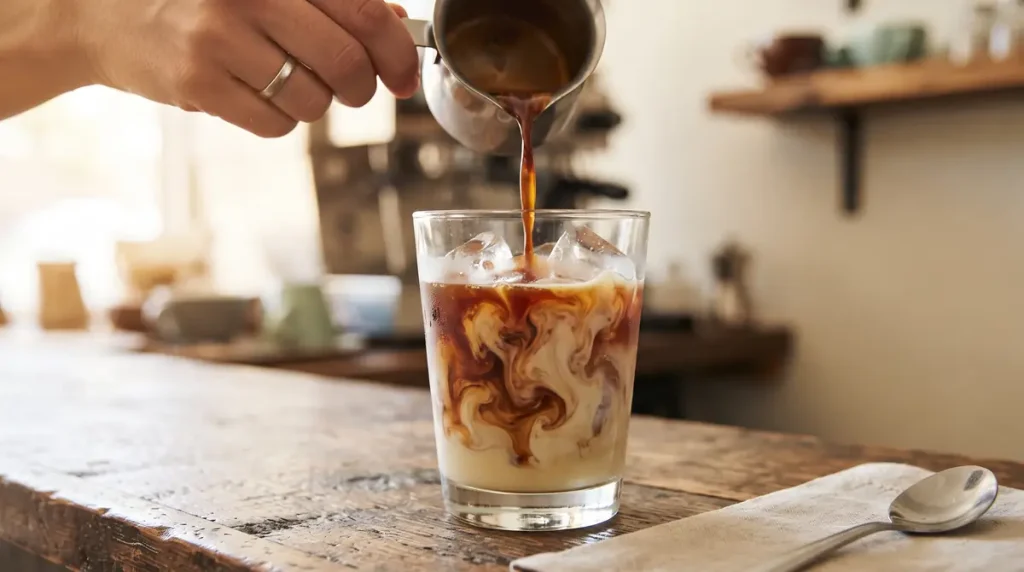
- Pour espresso. Pull 2 shots of espresso and pour them over the ice (or into the hot milk), letting the espresso cascade through rather than stirring it in immediately.
- Stir and serve. Give the drink one final stir to combine the layers and serve immediately.
Nutrition (per serving, estimated)
| Nutrient | Amount |
|---|---|
| Calories | 190 |
| Carbohydrates | 24 g |
| Sugar | 22 g |
| Protein | 7 g |
| Fat | 7 g |
| Saturated Fat | 4 g |
| Sodium | 60 mg |
What’s in a Spanish Latte?
A Spanish latte is espresso poured over milk with sweetened condensed milk stirred into the base. The condensed milk does two jobs at once: it sweetens the drink and thickens it, which is why a Spanish latte feels noticeably creamier than a latte made with syrup or plain sugar.
| Ingredient | Amount | Role in the drink |
|---|---|---|
| Espresso | 2 shots (about 2 oz) | Coffee base and bold flavor |
| Whole milk | 4–5 oz | Body and creaminess |
| Sweetened condensed milk | 1.5–2 tablespoons | Sweetness and thickness |
| Ice (iced version only) | About 1 cup | Chills the drink without watering it down |
For a wider look at how this stacks up against a standard espresso drink, What Is in a Latte? Uncover Ingredients to Master Your Coffee! breaks down the ratios most coffee shops use as a baseline.

Spanish Latte Ingredients
The basic version only needs four things:
- 2 shots of espresso (or 2 tablespoons instant coffee dissolved in 2 tablespoons hot water)
- 4–5 oz whole milk
- 1.5–2 tablespoons sweetened condensed milk
- Ice, if you’re serving it cold
Whole milk gives the richest result, but oat or 2% milk both work if that’s what’s in the fridge. Espresso is the closest match to a coffee shop version, though instant coffee gets you 90% of the way there when a machine isn’t an option.
Spanish Latte Milk-to-Coffee Ratio, Explained
Most lattes run about 1 part espresso to 2 parts milk, which leaves the coffee flavor fairly diluted. A Spanish latte flips that closer to 1:1, so the espresso holds its own against the milk and condensed milk instead of getting buried under it. That’s the main thing separating it from a regular latte, beyond the added sweetness.
| Cup size | Espresso | Milk | Condensed milk |
|---|---|---|---|
| Small (about 8 oz) | 1 shot | 3 oz | 1 tablespoon |
| Standard (about 12 oz) | 2 shots | 4–5 oz | 1.5–2 tablespoons |
| Large (about 16 oz) | 3 shots | 6–7 oz | 2.5–3 tablespoons |
Scale the espresso and condensed milk together as the cup size grows, and keep the milk close to matching the espresso volume rather than doubling it.
The Method, Explained
The full ingredient list and numbered steps are in the recipe card above — this section covers the “why” behind each one, since a couple of small details make a bigger difference than they look like on paper.
Layering the condensed milk in first, before anything else hits the glass, matters more than it seems. Pour it in later and it tends to sink and clump at the bottom instead of dissolving evenly, so the first few sips taste weak and the last sip tastes like syrup.
Milk goes in second, whether that’s cold milk for the iced version or steamed milk around 150°F for the hot one. Stirring it into the condensed milk before adding ice or espresso keeps that layer smooth rather than fighting with ice cubes or hot espresso for space.
Ice, for the iced build, comes before the espresso rather than after. That order sets up the last step to actually work.
Espresso goes in last and gets poured rather than stirred in. Poured over ice, it cascades down through the milk and condensed milk in visible streaks, which is where that marbled look comes from. Stir it in immediately and the whole drink flattens into one uniform brown color instead — still tastes the same, just loses the visual.
A final stir right before serving brings the layers together without erasing them completely.
No Espresso Machine? Use Instant Coffee Instead
Dissolve 2 tablespoons of instant coffee in 2 tablespoons of hot water, stirred until fully mixed with no grains left. Use it exactly where the espresso goes in either method above.
It won’t have the same crema or body as a real shot, but the condensed milk and 1:1 ratio still carry the flavor, so the difference is smaller than you’d expect.
If you’re building a home setup with actual espresso in mind, Dutch Bros Espresso: Everything You Should Know Before Your Next Shot covers what separates a good shot from a weak one.
Adjusting Sweetness and Strength
- Less sweet: Cut condensed milk to 1 tablespoon and add a splash more milk.
- Sweeter: Bump condensed milk up to 2.5–3 tablespoons for a dessert-style drink.
- Stronger coffee flavor: Add a third shot and hold the milk steady.
- Milder: Drop to a single shot and increase milk slightly to keep the cup full.
- Flavor add-ins: A dash of vanilla extract or cinnamon stirred in with the condensed milk works well without overpowering the base.
Want a cold foam topping instead of a plain milk pour? DIY Soft Top Foam Recipe: Make Barista-Style Cream at Home shows how to whip one up in a few minutes.
Common Mistakes to Avoid
- Scorching the milk. Heating it past 160°F gives it a scalded taste that fights the coffee flavor.
- Skipping the condensed-milk-first step. Adding it last makes it harder to dissolve evenly and settles at the bottom instead of blending through.
- Using a regular latte ratio. Doubling the milk against the espresso waters down the exact flavor that makes this drink different.
- Over-diluting instant coffee. Too much water thins the flavor before the condensed milk even gets a chance to balance it.
Pro Tips for the Best Spanish Latte at Home
Fresh espresso beans make a bigger difference here than in most drinks, since the 1:1 ratio puts the coffee flavor front and center instead of hiding it behind extra milk. A basic milk frother and a reliable espresso setup go a long way if this becomes a regular order. 7 Coffee Bar Essentials Worth Buying for the Perfect Home Coffee Setup lays out what’s actually worth buying versus what you can skip.

If the Spanish latte becomes a new favorite, a few other copycat drinks are worth trying next. 3 Dutch Bros Copycat Drinks You Can Make at Home covers three more espresso drinks built with the same basic tools.
Quick Reference Card
| Step | What to do |
|---|---|
| 1 | Add condensed milk |
| 2 | Add milk (cold for iced, steamed for hot) |
| 3 | Add ice (iced version only) |
| 4 | Pour espresso over the top |
| 5 | Stir and serve |
FAQs
How do you make a Spanish latte at home?
Combine sweetened condensed milk, espresso, and milk at roughly a 1:1 coffee-to-milk ratio. Add condensed milk first, then espresso, then milk (steamed for hot, cold with ice for iced).
What are the basic ingredients in a Spanish latte?
Espresso, whole milk, and sweetened condensed milk. Instant coffee can stand in for espresso, and milk can be swapped for oat or 2% depending on preference.
What does a Spanish latte have in it?
Espresso, milk, and sweetened condensed milk make up the base. The condensed milk adds both sweetness and a thicker texture compared to a standard latte.
What is the ratio of milk to coffee in a Spanish latte?
About 1:1, meaning the espresso and milk are used in roughly equal amounts. That’s stronger in coffee flavor than a regular latte’s typical 1:2 ratio.
Can you make a Spanish latte without an espresso machine?
Yes. Dissolve 2 tablespoons of instant coffee in 2 tablespoons of hot water and use it in place of the espresso shots in either method above.
What’s the difference between a Spanish latte and a regular latte?
A regular latte uses more milk relative to espresso and is usually sweetened with syrup, if at all. A Spanish latte uses less milk relative to espresso and gets its sweetness and creaminess from condensed milk instead.
Can you make a Spanish latte hot instead of iced?
Yes. Follow the same ingredient ratio, but steam the milk instead of chilling it and skip the ice.
How much condensed milk goes in a Spanish latte?
About 1.5–2 tablespoons for a standard 12 oz cup. Adjust up for a sweeter drink or down for a lighter one.
Can you make a Spanish latte without condensed milk?
It won’t be a true Spanish latte without it, since the condensed milk is what defines both the sweetness and texture. A mix of sugar and heavy cream comes closest as a substitute, though the texture will be thinner.
Does Starbucks sell a Spanish latte?
Starbucks doesn’t have an official Spanish latte on its standard menu, though baristas can build one as a custom order using espresso, milk, and a sweetener like vanilla syrup in place of condensed milk.
A Spanish latte comes down to getting that 1:1 ratio right and layering the condensed milk in before the espresso hits the cup. Start with the iced version if you’re new to it, since the cascading espresso-over-ice pour makes the ratio easy to see and adjust on the fly.